%2Ffit-in%2F250x250%2Fguide_websites%2F19799%2Fimages%2F1736532850430image-2025-01-11t021342.136.png&w=1200&q=100)
/users/90c39ed9-c4f8-40a2-910c-1497dfd6dea8/ratecard/22e2f49f-8d53-4f6a-8f4f-428b8b317d96.jpg)
%2F300x300%2Fusers%2F90c39ed9-c4f8-40a2-910c-1497dfd6dea8%2Fratecard%2F22e2f49f-8d53-4f6a-8f4f-428b8b317d96.jpg&w=256&q=75)
%2F300x300%2Fusers%2F90c39ed9-c4f8-40a2-910c-1497dfd6dea8%2Fimages%2Fsmallmouth-bass-fishing-adventure-mn-4679.png&w=256&q=75)
%2F300x300%2Fusers%2F90c39ed9-c4f8-40a2-910c-1497dfd6dea8%2Fimages%2Fsmallmouth-bass-catch-stillwater-lake-3470.png&w=256&q=75)
%2F300x300%2Fusers%2F90c39ed9-c4f8-40a2-910c-1497dfd6dea8%2Fimages%2Fnight-fishing-boat-dock-setup-4667.png&w=256&q=75)
%2F300x300%2Fusers%2F90c39ed9-c4f8-40a2-910c-1497dfd6dea8%2Fimages%2Ffishing-fun-stillwater-3176.jpg&w=256&q=75)
%2F300x300%2Fusers%2F90c39ed9-c4f8-40a2-910c-1497dfd6dea8%2Fimages%2Fexhilarating-fishing-tour-mn-2953.jpg&w=256&q=75)
%2F300x300%2Fusers%2F90c39ed9-c4f8-40a2-910c-1497dfd6dea8%2Fimages%2Fmn-fishing-tours-2997.jpg&w=256&q=75)
%2F300x300%2Fusers%2F90c39ed9-c4f8-40a2-910c-1497dfd6dea8%2Fimages%2Fstillwater-fishing-tours-2585.jpg&w=256&q=75)
%2F300x300%2Fusers%2F90c39ed9-c4f8-40a2-910c-1497dfd6dea8%2Fimages%2Ffishing-adventure-mn-3100.jpg&w=256&q=75)
%2F300x300%2Fusers%2F90c39ed9-c4f8-40a2-910c-1497dfd6dea8%2Fimages%2Flake-sturgeon-fishing-tour-stillwater-3138.jpg&w=256&q=75)
%2F300x300%2Fusers%2F90c39ed9-c4f8-40a2-910c-1497dfd6dea8%2Fimages%2Ffishing-fun-stillwater-2952.jpg&w=256&q=75)
Luxury Ice Castle Rental on St. Croix River
 St. Croix River
What you will be catching:
 Lake Sturgeon
 Crappie
 Walleye
 American Yellow Perch
 Northern Pike
- Fully equipped 21' Ice Castle accommodates four guests comfortably
- Pre-drilled fishing holes with generator rental and rod options available
- Complete amenities include beds, bathroom, kitchen, and entertainment system
Trip Pricing and Availabilities:
Trip pricing information is temporarily unavailable.
Ice Fishing Paradise on the St. Croix River
Get ready for the ultimate ice fishing getaway on the St. Croix River with our 21' Ice Castle sleeper rental. This ain't your grandpa's ice shack – we're talking a mobile winter fishing palace that'll keep you warm, comfy, and on the fish. Perfect for a crew of up to four anglers, this rig is decked out with all the creature comforts you need for a killer day (or night) on the ice.
What to Expect on the Water
When you roll up to your spot on the St. Croix, everything's set for you to start fishing right away. We'll have the holes pre-drilled and the house toasty warm. Inside, you've got a sweet setup with a big bed up top that raises and lowers, plus two smaller fold-down beds. There's a full kitchen with a fridge, stove, oven, and microwave, so you can cook up your catch or heat up some grub. And when you're not jigging, kick back and watch the big screen TV or crank some tunes on the radio.
Gear and Gadgets
While we don't include bait, rods, or tackle in the base rental, we've got you covered if you need 'em. Rods are available for rent at $5 a pop per day. If you want bait, just give us a heads up and we'll sort you out for a small fee. For the tech-savvy anglers, there's 120V power to run your flashers or charge your gadgets – just remember to add on the generator rental if you want to use the outlets or recharge the house batteries on longer trips. It's an extra $50 per day, but that includes all the gas you'll need.
Top Catches This Season
The St. Croix is serving up some prime ice fishing action this winter. Anglers have been pulling up some chunky crappies, walleyes with shoulders, and the occasional monster northern pike. If you're lucky, you might even tangle with a dinosaur-like lake sturgeon – now that's a fight through the ice! The perch fishing has been on fire too, with plenty of jumbos in the mix. Remember, half the fun is in the chase, so even if the fish are being finicky, you're in for a great time out on the ice.
Why Anglers Keep Coming Back
Folks love this setup because it's like having your own little cabin right on the ice. No need to lug all your gear back and forth – just settle in and fish to your heart's content. The slide-out bathroom is a game-changer, especially on those longer stays. Plus, with the generator option, you've got all the power you need to keep things running smooth, whether you're cooking up a storm or watching the game between bites.
Species You'll Want to Hook
Crappie: These tasty panfish are a St. Croix staple. They school up in the winter, so once you find 'em, you're in for some fast action. Try fishing near drop-offs or submerged structure with small jigs tipped with minnows or plastics.
Walleye: The crown jewel of many ice anglers' targets, walleyes in the St. Croix can grow to trophy sizes. They're most active during low light periods, so be ready at dawn and dusk. Jigging spoons or minnows on a dead stick are go-to tactics.
Northern Pike: These toothy predators will test your gear and your nerves. Set up some tip-ups with large minnows or sucker meat, and be prepared for a rush when that flag pops up. The St. Croix holds some real giants, so make sure your lines are in good shape.
American Yellow Perch: Don't let their size fool you – jumbo perch are some of the best-eating fish around. They often hang with crappies, so if you're catching one, you might get into both. Small jigs with waxworms or minnow heads are perch candy.
Lake Sturgeon: The St. Croix is one of the few places where you can target these prehistoric fish through the ice. They're catch-and-release only, but the thrill of hooking into one of these behemoths is unbeatable. Use heavy gear and be patient – sturgeon fishing is a waiting game.
Time to Book Your Spot
Listen, the ice isn't gonna be around forever, and neither are the open dates on this sweet Ice Castle. Whether you're a seasoned pro or just getting into ice fishing, this setup is the ticket to an awesome winter adventure. Bring your buddies, your family, or make it a solo mission – either way, you're in for some of the best hard water action the St. Croix has to offer. Don't miss out on your chance to get out there and make some memories (and hopefully catch some dinner). Give us a shout and let's get you on the ice!
Learn more about the species
Lake Sturgeon
Lake Sturgeon (Acipenser fulvescens) Fish Description
The Lake Sturgeon (Acipenser fulvescens) or Rock Sturgeon is a freshwater gamefish found in almost all water systems across North America. It is also sometimes called the “Prehistoric Fish” as it’s been found that, according to fossil records, it already existed since the Cretaceous period about two hundred million years ago. They are also known for their long lifespan with males reaching up to fifty-five years while females can reach more than a century.
Aside from being the oldest native freshwater fish on the continent, it is also the largest. Females are often much bigger than males as they can measure up to nine feet long and weighing a little more than three hundred pounds. Males, on the other hand, have been known to reach only six feet in length. The biggest verified catch, however, measured eight feet long and weighed three hundred pounds. It was caught in Lake Michigan way back in 1943.
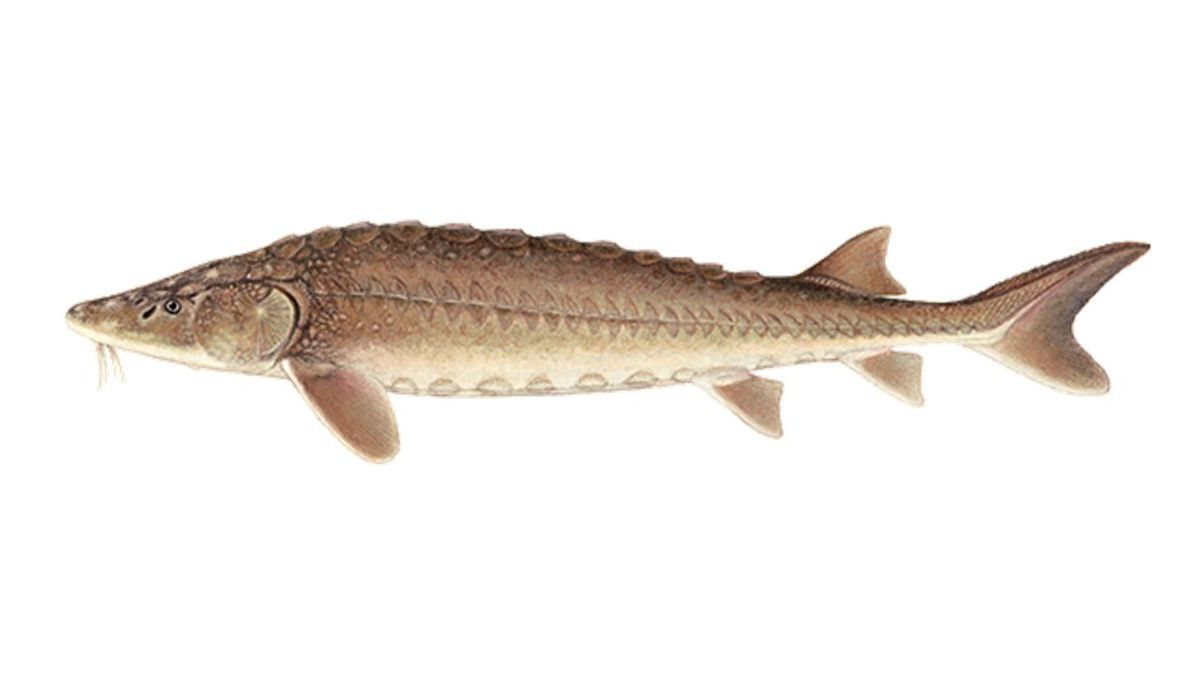
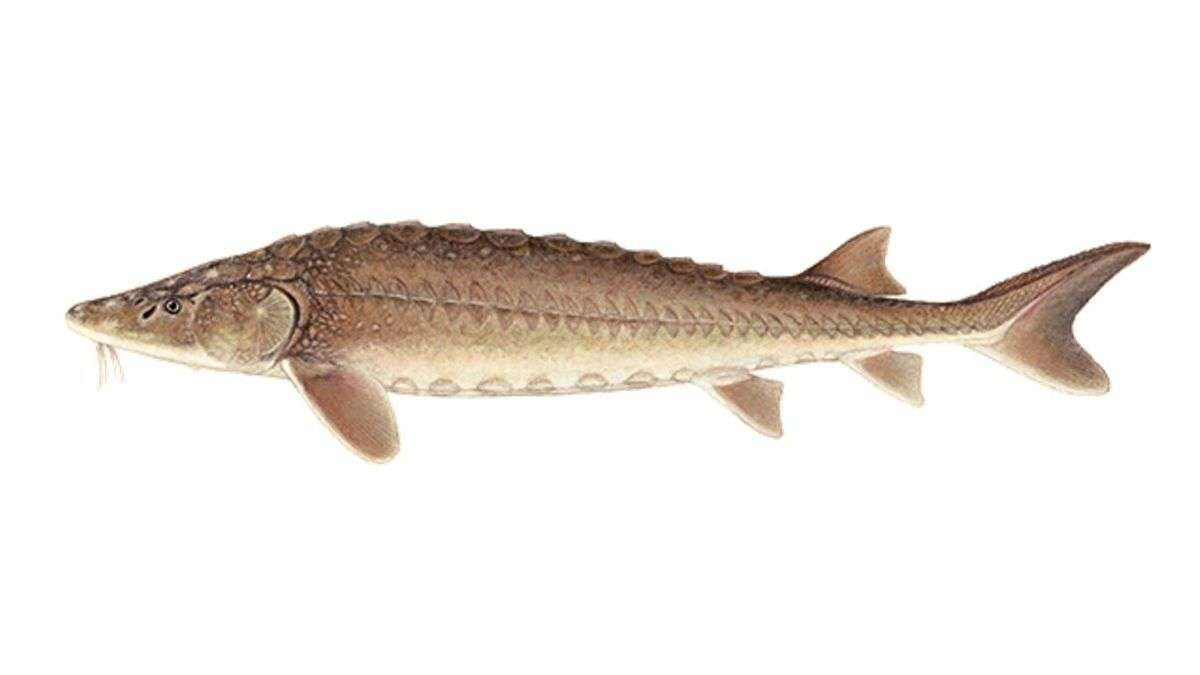
Lake Sturgeons easily be identified because of their rather menacing appearance as well as their size. These freshwater behemoths have a long, sleek body that’s greenish to grey in color. It doesn’t have scales, rather, rows of spiny plates on the sides that act as armor that protects them from abrasions and predators. Much like sharks and rays, most of their bones are cartilaginous, making their body a bit more flexible, which helps them fit into crevices at the bottom of lakes and rivers as they forage for food. And with the help of their four barbels (whisker-like organs) located in the front of their mouth, they can “feel” their way around the lake and river beds and locate their diet, which consists mainly of insects, worms, snails, crayfish, and small fishes.
Interesting Facts About Lake Sturgeon
- The biggest Lake Sturgeon caught on record measured eight feet long and weighed more than three hundred pounds.
- The world record fish was caught by a sports angler in Lake Michigan in 1943.
- Despite its intimidating size and appearance, the Lake Sturgeon is a docile creature.
- They eat by sucking their mostly bottom-dwelling preys into their retractable mouth.
- They have been known to jump in the air during the spawning season.
- They have one of the longest lifespans among freshwater fish with some individuals known to live for more than a century.
- They are also sometimes called “Prehistoric Fish” as fossil records have shown they already existed since dinosaurs still roam the earth.
- They are mostly targeted for their tasty meat and eggs, which are made into caviar by curing in salt.
- Lake Sturgeon populations were once healthy in The Great Lakes but have seen a drastic decline from the late 1800s up to now.
- The population dropped due to overfishing and pollution as well as the construction of man-made structures near and on the waters, which destroyed their natural habitat.
- Strict regulations, including fishing limitations for both sport and commercial fishers, were placed to help with the species’ population recovery.
- Other population recovery measures have also been taken, including taking eggs from their habitat and brought to hatcheries until they reach their juvenile stage when they would be released back into the wild.
- Lake Sturgeon populations have recently reached “safe” levels
Lake Sturgeon Average Size and Swimming Speed
Although there were some reports of Lake Sturgeons reaching six to nine feet long, these sizes are quite rare. Most that can be fished today can only reach three to six feet and weigh between thirty to one hundred pounds on average. Also, Lake Sturgeons can often be seen swimming slowly on river and lake beds, but they can swim quickly in short bursts if they have to, especially when they feel threatened.
Where to Find Them - Habitat and Distribution
They were once abundant in the Great Lakes. And though the populations have grown since regulations were placed, their numbers haven’t fully recovered yet. Aside from the Great Lakes, you can find them in the Mississippi River drainage basin south to Alabama and Mississippi. You may also check out Detroit River and up north to Lake St Clare. You can also fish up north in Canada via Lake Winnipeg as well as both North and South Saskatchewan Rivers and even as far north as the Hudson Bay Lowlands. They are also said to be abundant in Lake Champlain and various Vermont rivers as well as in the lakes and rivers of Wisconsin and Minnesota.
Lake sturgeons are bottom-dwellers, meaning they prefer sandy or gravel habitat at the bottom of a river or lake bed from where they forage for food. That said, you will have a better chance of hooking one near deep holes, eddies and along drop offs.
Lake Sturgeon Fishing Tips
Lake Sturgeons are quite huge so you will need to use tackle that is strong and sturdy enough to handle a fish that weighs 100 pounds or more. You may also need a big landing net and gloves not only because of their size but because they have rough skin as well as bony plates with razor sharp spines, which, of course, can be painful if they made contact with your bare skin. As for bait, a glob of nightcrawlers would be enough to lure these behemoths into your trap.
Crappie
Crappie (Poxomis)
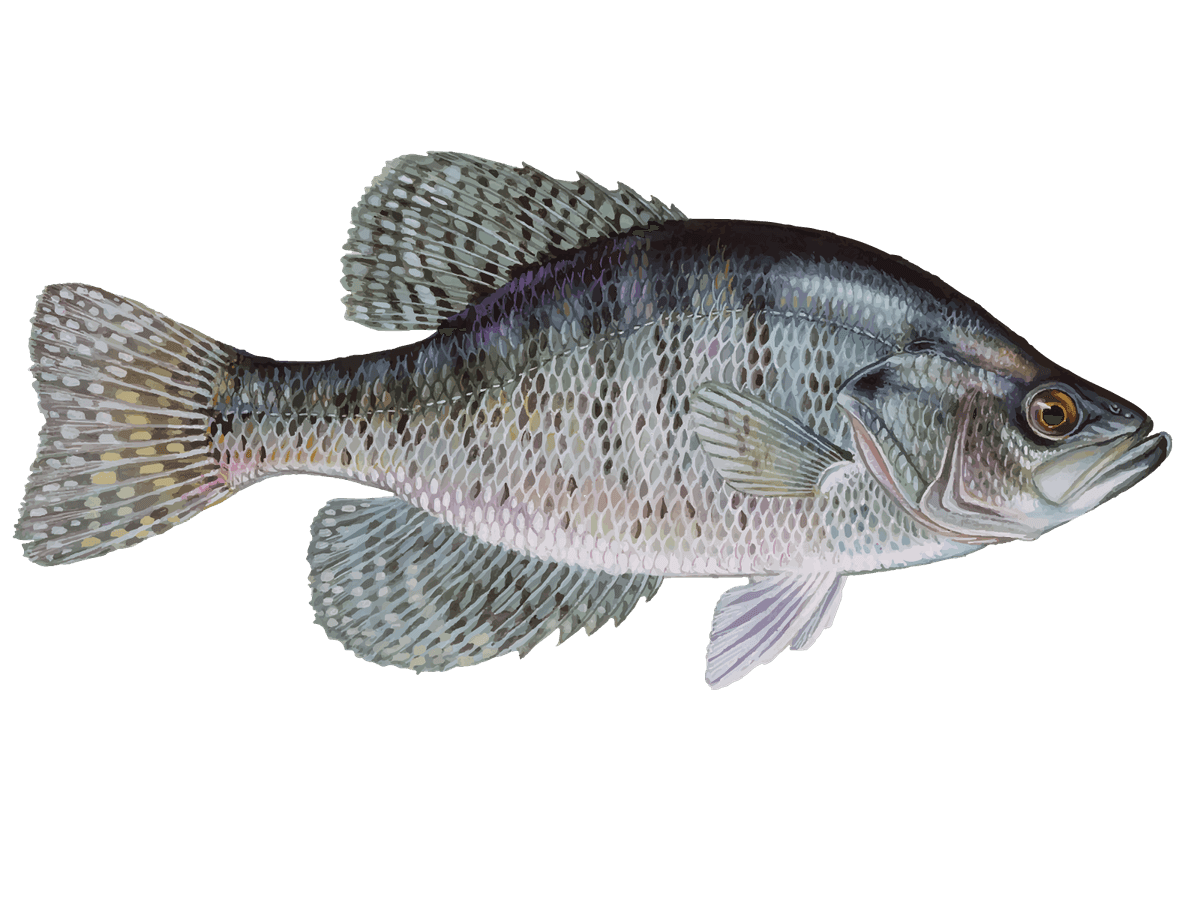
Crappies are game fish and the largest members of the Centrarchidae family. They are present in nature as Black Crappie (Poxomis nigromaculatus) or and White Crappie (Poxomis annularus). Both the species are similar to each other, apart from few distinctions. White crappie will have vertical bars running the length of their body, and black crappie will have no discernible pattern and will just be speckled, hence their nickname, “specks". White crappie has 5-6 spines, and black crappie has 7-8 spines. Anglers often differentiate the two by body shapeGrenade Lake, Mississippi, and Reel foot Lake are considered among giant crappie lakes.
Crappie Habitat and Distribution
Both the crappies have a similar habitat, though black crappie prefers clearer water than white crappie. These fishes can be found in rivers, lakes, and backwater pools swimming in shallow waters or hiding among bushes, vegetation, or other covers.
Crappie is native to Canada and the eastern States. It is a much-enjoyed game fish in North America and inhabits the Great Lakes, Hudson Bay, and the Mississippi River Basins.
Crappie Size and Weight
Crappie can be 7-12 inches long and weigh about 0.5-1 pounds.
Crappie Interesting Facts
Crappie is known for its tasty and white meat.
- Both Poxomis nigromaculatus and Poxomis annularus are less active during the day.
- Both the fishes have a different number of dorsal fin spines. White Crappie has 6 while Black Crappie has 7 or 8.
- Mouth of Black Crappie is larger and reaches mid-eye and has a resemblance to largemouth bass.
- Crappie travels in schools.
- Female lays 5000-60000 eggs.
- Crappie can live for 7 to 10 years.
Is Crappie Good to Eat?
Despite its name, crappie is an excellent source of nutrition, containing high amounts of protein and essential omega-3 fatty acids. Although it's not as popular as salmon or tuna, crappie can be a delicious addition to any healthy diet. They are known for their delicate taste and ease of preparation.
When cooked properly, crappie has a delicate flavor and flaky texture, making it perfect for grilling, frying, or baking. Moreover, because they are smaller fish than other common species, such as bass or catfish, the chances of mercury contamination in their flesh are much lower.
Crappie Spawning
Crappie spawning season begins in early spring and summer when the water temperature is 62 F-68 F. Male builds the nest in soft or gravelly spots, the female lays the eggs, and the male guards the nest. Eggs take 2 to 5 days to hatch.
Crappie Food
Depending on the age, Crappie victims consist of zooplankton, crustaceans, small fish, minnows, insects, gizzard or threadfin shads, and larvae of other game fishes.
Crappie Fishing
Crappie is most active at dawn or dusk. Anglers recommend using live bait and properly sized hooks, not too small, not too large.
Spin or Bait Fishing for Crappie:
Spin fishing for crappie is a popular angling technique used for years. The use of small lures, such as crappie spinners or jigs along the bottom with light tackle, makes it possible to catch these elusive fish with ease. Crappie spinner fishing involves using a spinning rod and reel setup to cast the lure out into the water and retrieve it in a steady fashion.
When fishing for crappie with a spinner, it's essential to choose the right size and color of the lure. Smaller lures are more effective when targeting this species due to their smaller mouths. Additionally, selecting colors that mimic the natural prey of crappie can help increase your chances of catching them. It's also important to consider where you're casting your line when using spinners for crappie fishing.
Another popular technique is a bobber with a hook with live bait such as worms or small minnows. This is a proven method to catch crappie.
Fly Fishing for Crappie:
- Fly fishing for Crappie is exciting. Both dry and wet flies work well. Use dry flies on still and calm days, especially early and late. A great way to start a young angler on fly fishing, crappie is not as challenging as much other game fish.
- The best-wet flies for fly fishing are streamers and nymphs and soft large hackles. Streamers (small) are perfect when the fish is eating minnows.
- Anglers can fly fish for Crappie near fallen trees or bushes using a dry or wet fly. Be patient and let the fish properly take the hook. - Clouser Minnow is the ultimate fly bait that can catch even the sluggish crappie.
Crappie Baits and Lures:
- Spinners
- Pan-fish jigs
- Small crankbaits
- Insects
- Worms
- Streamer flies
- Small minnows
- Nymphs
Walleye
Walleye (Sander Vitreus) Description
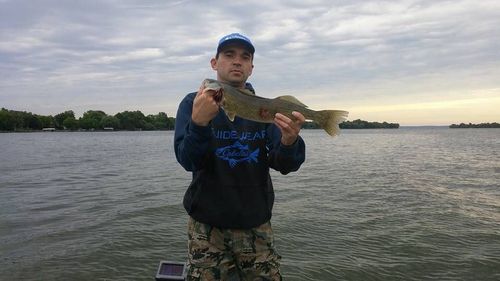
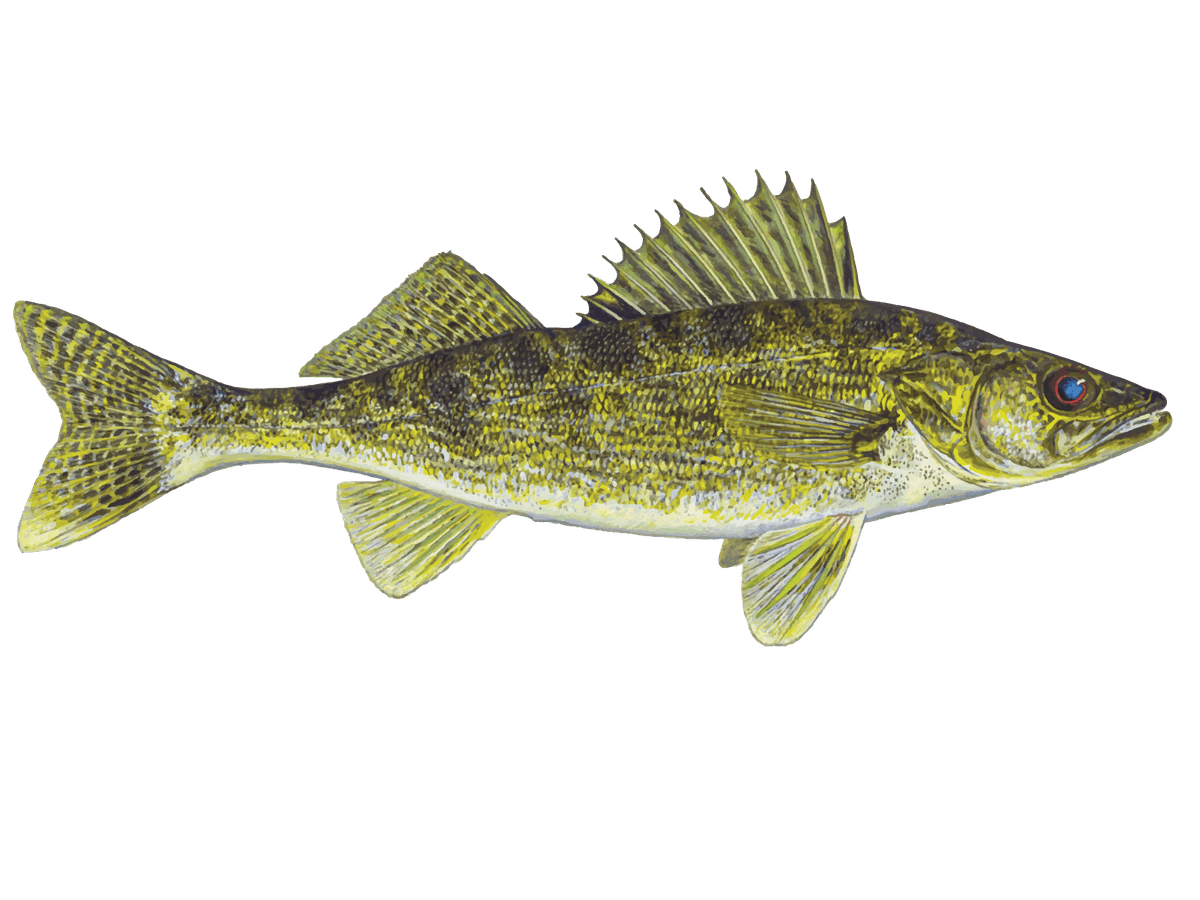
Walleye are freshwater fish that is a part of the perch family. They are a very popular game fish for the angler in the regions where they are found, and also a favorite for the dining table. Walleye are long and thin and have a golden and olive coloring with white bellies. One predominant feature of the walleye is its eyes, which have a silver eyeshine called the tapetum lucidum. This eyeshine greatly aids the walleyes when feeding in low-light conditions.
Walleye Habitat and Distribution

Walleye live in a wide range of habitats. In small to large rivers, to deep and shallow lakes. They are fairly particular to where they like to be in these bodies of water and see out sand, rock, or gravel bottoms. Walleye will usually stay deeper in the water column during daylight hours and use weeds, timber, or other structures for cover. In River systems, they will likely spend their daylight hours in deep holes and drop-offs, and move out into the shallows to seek forage during the lowlight period. Walleyes can tolerate water temperatures from 32 to 90 degrees Fahrenheit but are most comfortable when water temperatures are at 70 degrees. Walleye are nocturnal creatures that feed in shallow waters at night. Adult walleye primarily consume other fish. Small crustaceans and insects, primarily mayflies, are eaten by young walleye.
Walleye are found in the Arctic south of Canada down to the Great Lakes region and east to the St. Lawrence systems. Lake Erie is a well-known home of walleye anglers and great walleye fishing. The Midwest and Canada are the most popular areas with the best fishing, but over decades the species has been introduced artificially into lakes and reservoirs all over North America. The breathtaking waters of Lake of the Woods and Rainy River have earned the title of "Walleye Capital of the World." It has some of the best fishing in the world, and anglers come here year after year in search of that elusive record catch.
Typical Size and Weight
Walleye are reasonably large fish with a sleek and conical body shapes and a mouth lined with sharp teeth. the adult walleye can grow to 30 inches or more in length and top out at around 20 pounds in weight. Females generally grow larger than males.
Interesting Facts
The Walleye also has a European counterpart, the zander, that looks very similar but the zander can grow much larger and can reach a weight of 40 plus pounds.
The walleye can live for decades, with the oldest recorded fish being 29 years old. In areas with heavy fishing pressure however, Walleye usually don’t live past 5 or 6 years of age.
Fishing Techniques - How to Catch Walleye
Walleye can be a challenging game fish to pursue. Their location in a body of water and the tactics used to catch these fish can vary depending on certain times of the year. Walleye generally live at depths of 10 feet or greater, though in the spring and at night they can be found in shallow water areas. Freshwater fishing for walleye is best in the evening when minnow-style lures or jigs are fished near the bottom over rock piles or along the edges of weed beds.
Finding the fish is one of the biggest challenges for the walleye angler and the best place to start it by fishing structure. The angler should search multiple types of structure at varying depths to figure out where the walleye are on any given day. Be sure to check break lines, deep weed edges rock piles, and even in the middle of the basin for suspended schools of baitfish. With a little bit of time on water exploration, you will find the Walleye population.
Live bait is the key to successful Walleye catches such as minnows, nightcrawlers, and leeches. One of the best techniques is a live bait rig, to which you troll your lure slowly along the bottom. These rigs include a ¼ or a ½ pound sinker, a swivel, a 3 - 6 foot leader of a 6-pound fishing line, and a No. 4 or 6 hook.
Is Walleye Good to Eat
Walleye is a delicious fish making it a popular choice among seafood lovers. The mild, flaky texture of the fish along with its sweet, buttery flavor is enough to make anyone's mouth water. This makes walleye an excellent ingredient that pairs well with a wide variety of dishes. Whether you fry or grill it, walleye never fails to impress with its delicious taste. So, if you're looking for a healthy and tasty addition to your meals, walleye is definitely the way to go!
Walleye meat has a firm texture that holds up well to cooking methods such as grilling, frying, or baking. Its mild taste can be enhanced by seasoning it with herbs and spices or marinating it in your favorite sauce. Walleye also has low levels of mercury and other harmful contaminants, making it safe to eat regularly.
When preparing walleye, remove the skin and bones before cooking. This will give you a clean fillet.
However, it's not just its flavor that makes it so popular. Walleye is also a very nutrient-dense food that provides numerous health benefits. It's rich in omega-3 fatty acids, B vitamins, and selenium, all of which are essential for maintaining optimal health. Omega-3s are known to reduce inflammation in the body and improve heart health, while B vitamins play a crucial role in energy production and maintaining a healthy nervous system. Selenium is an important mineral that helps protect against oxidative damage and supports the immune system. By adding Walleye to your diet, you not only get the pleasure of savoring a delicious meal but also the nutritional benefits that come along with it. So, go ahead and indulge in this delectable fish to keep your body healthy and functioning at its best.
American Yellow Perch
American Yellow Perch (Perca Flavescens) Description
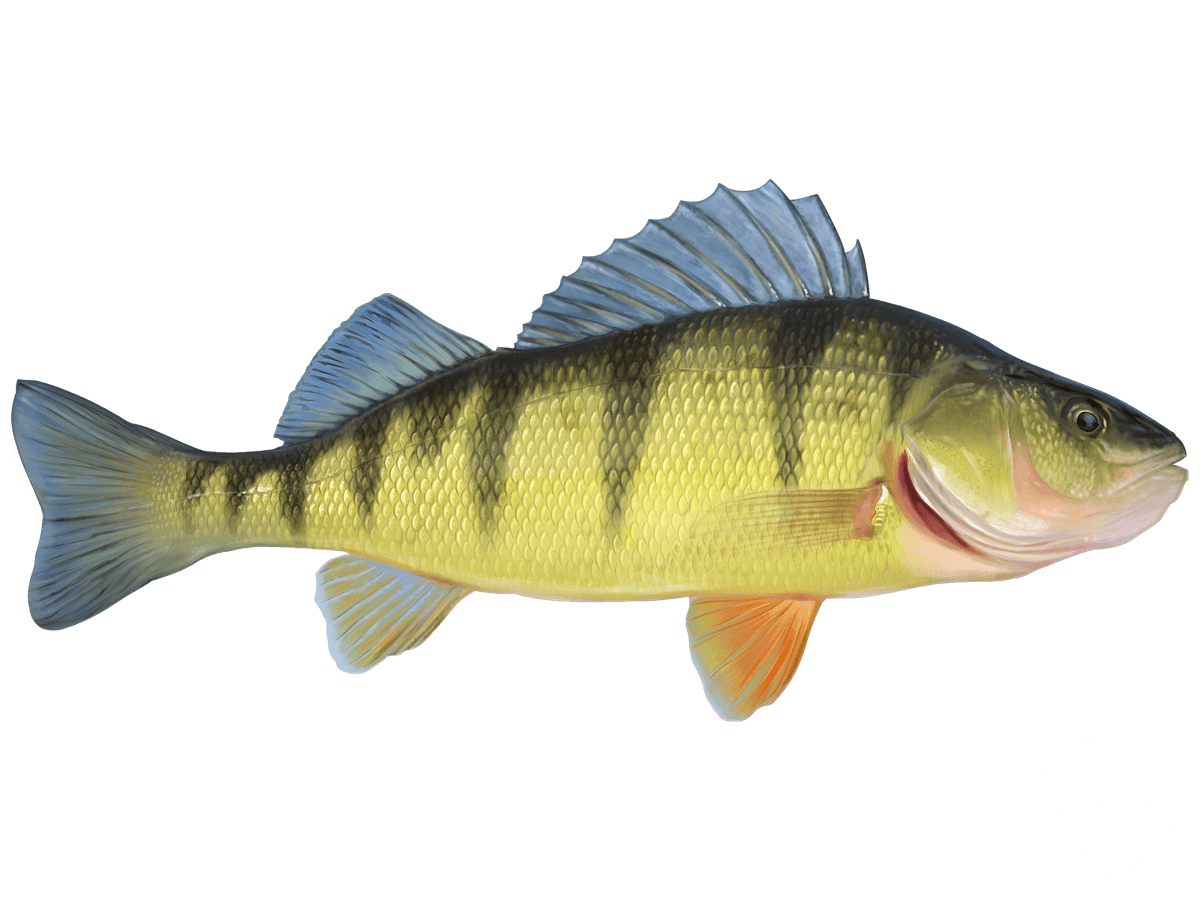
The American Yellow Perch are one of the smaller-sized members of the perch family, Percidae. They have an elongated, oval body with a long blunt snout. Like most perches, it has two separate dorsal fins. The first dorsal fin contains 12-14 spines and 12 soft rays. The second has 2-3 spines and 8 soft rays. They are a golden yellow, however, their color can sometimes vary from bright green to olive green or golden brown. Their sides have a pattern of vertical bars. Their pectoral fins are transparent and amber in color. The juveniles are paler and a whitish color.
Yellow Perch have a large number of sharp teeth. They are rough to the touch because of their overlapping, comb-like scales.
Size and Diet
The largest recorded American Yellow Perch is 20 inches although they are more commonly found at 7.5 inches and 2 pounds.
Yellow Perch eat a variety of invertebrates such as insects, mollusks, chitons, snails, and worms. squids, along with small fish.
Spawning
The Yellow Perch spawning occurs in the spring when water temperatures rise above 36 degrees and typically occurs at night or early morning. Along the shorelines, the females extrude their eggs in long ribbons. You will find them draped along submerged vegetation, dead branches, and trees. Once the females extrude their eggs, groups of male yellow perch will follow and fertilize them.
Interesting Facts
Yellow perch is one of the easiest fish to catch in all seasons and tastes great. It makes up around 85% of the sport fish caught in Lake Michigan.
Common names for the perch are yellow perch, American perch, and lake perch
In the Northeastern United States, these Perch are an extremely important food source for birds. The cormorants specifically target yellow perch as their primary prey. Other birds that also prey on them include eagles, gulls, hawks, and many more.
Survival rates of juvenile yellow perch are low because they are much preyed upon.
Fishing Technique
To catch these fish, a good ultralight spinning or spin-cast combo spooled with 2-4lb (1-2kg) mono works well.
Most yellow perch catches will be made with live bait. You can't go wrong with minnows, leeches, or worms, but you can use almost any insect or small fish or fish parts.
If you are looking at lures, small jigs, spinners, and jigging spoons will work.
Yellow perch are schooling fish and it's not unusual to see a school of 200 fish. Go get'em!
Habitat and Distribution
These Perch live in ponds, lakes, creeks, and slow-flowing rivers. You will find them in heavily vegetated waters among reeds, weeds, docks, and other structures. You may find large schools of Yellow Perch near the shore during the spring. They can also be found in brackish water.
Yellow Perch are found in the rivers of the Atlantic and Arctic Oceans, the Great Lakes, the Mississippi River basin, and throughout the majority of the northeast United States and parts of Canada.
Northern Pike
Northern Pike (Esox lucius) Fish Description
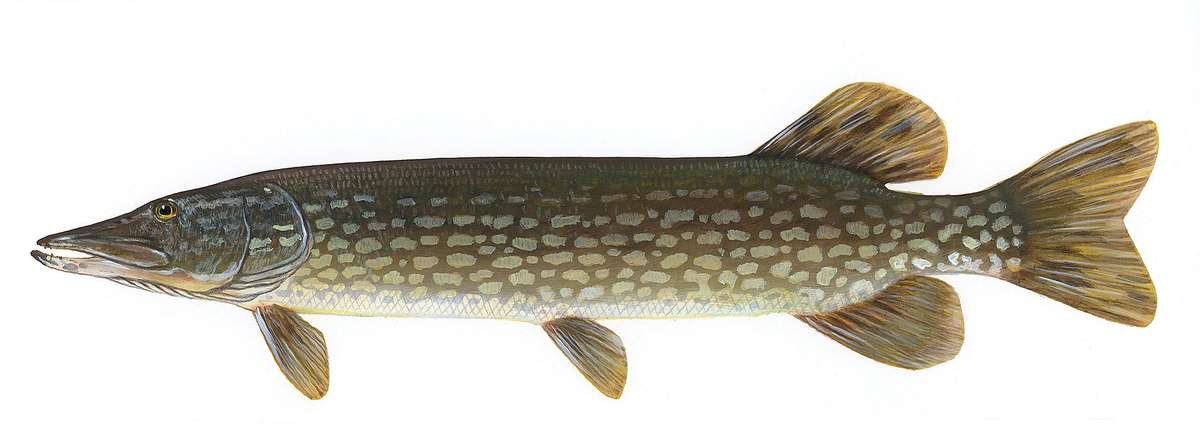
The Northern Pike (Esox Lucius) is a popular freshwater gamefish known for its greedy carnivorous nature. They have an elongated body and a grey to greenish color that fades to a yellowish-white belly. They have distinctive uneven rows of yellowish to white specks that run across its body.
Diet
Northern Pike is an aggressive hunter and not very picky about their food, eating just about anything that comes their way. They prey on other fish, including golden shiners, yellow perch, bluegills, suckers, and even other Northern Pikes. Larger ones have also been known to snatch small waterfowls, frogs, and rodents with their large mouth lined with sharp teeth when these unknowing victims are swimming on the surface or if they get too close to the edge of the water.
Spawning
Northern Pike have a short spawning season, March-April. Since the adults are solitary and highly territorial, they will leave their area and travel inshore or upstream to spawning areas in early spring. Spawning normally occurs during day in shallow, quiet areas with a vegatated bottom. They leave their eggs once they are laid.
Interesting Facts
- They are solitary predators.
- They are mostly territorial.
- The oldest pike on record is 25 years old.
- They are also referred to as freshwater sharks.
- They can lie still for long periods of time.
Northern Pike Speed and Average Size
Northern Pikes are strong swimmers, but they are not actually known for their speed as they can only swim at an average of eight to ten miles per hour. It may not be as fast as other species; it has, however, the ability to sudden high-energy starts that they use for ambushing preys or for escaping life-threatening situations.
The average Northern Pike is 2 feet long and 34 pounds. The largest pike ever caught in the U.S. was reportedly 4 feet 10 inches.
Distribution and Habitat
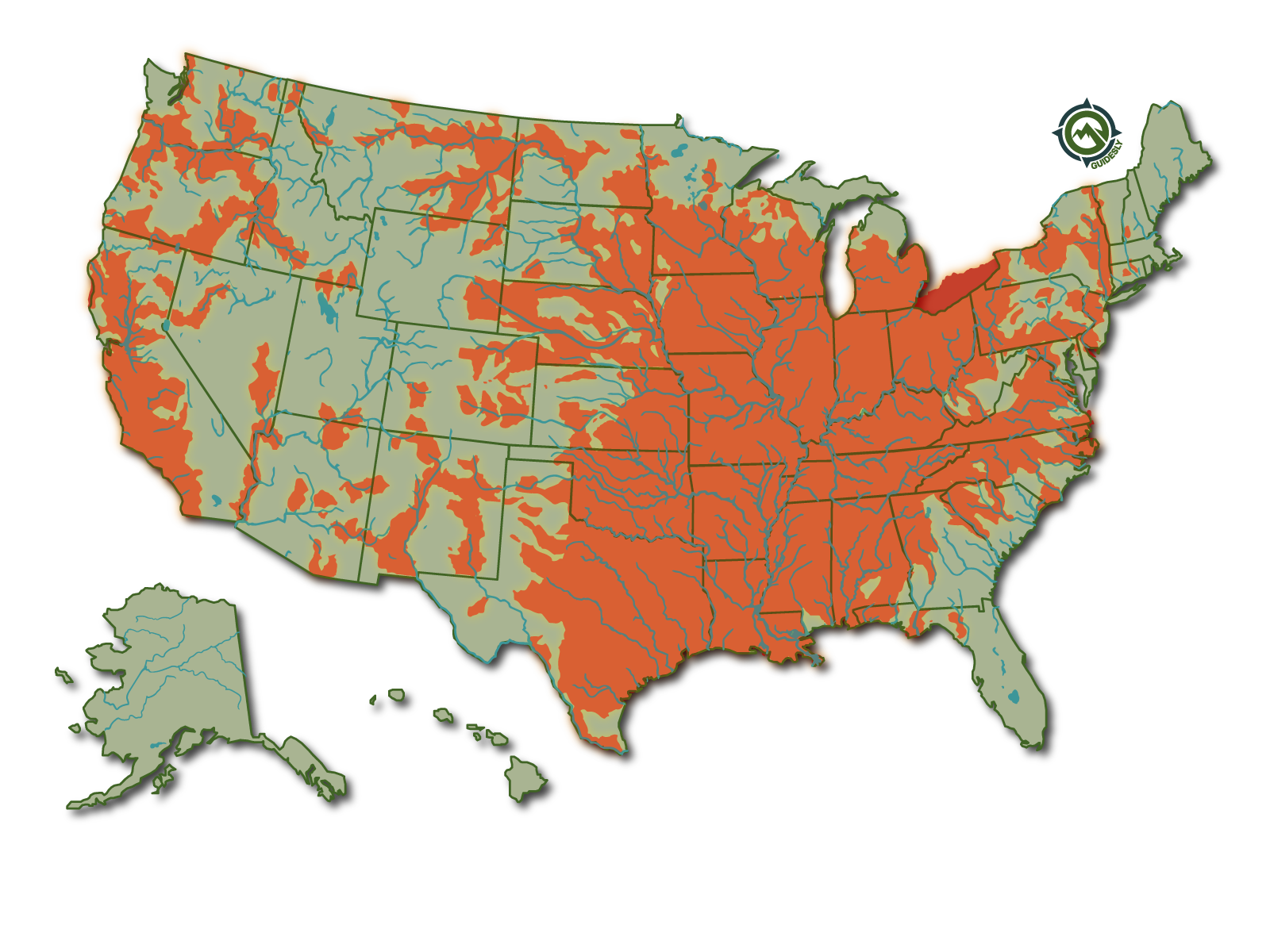
As the name suggests, Northern Pikes are mostly found throughout the northern half of North America, with a higher population in the Great Lakes, northern New England, eastern New York, Minnesota, and the Ohio Valley. You can also find them in Nebraska and Missouri and as far north as Alaska and Canada.
They live in cool, shallow areas of streams, lakes, and rivers where they have good access to their food. However, in the summer, when waters heat up, they head to the deeper, cooler waters.
Fishing Techniques - How to Catch Northern Pike
A Northern Pike catch can be very rewarding as it’s known to be a tough fighter. You should remember to keep your distance from its mouth as its dagger-like teeth can cause significant damage to anything it can clamp down on.
With its aggressive nature and its strong swimming ability to boot, catching Northern Pike can be a daunting challenge. A 7-foot, medium-action rod paired with a regular spinning reel with a drag system that can stand a maximum of at least 15 pounds is more than enough to handle this fish. Equip your rod and reel with a more durable 15 to 20-pound braided line at the minimum so that the chances of the Pike’s sharp teeth breaking the line will be decreased.
Because these fish are known to be voracious eaters, various lures such as soft plastic swim-baits, inline spinners, and spoons can easily attract the fish. Just make sure to reel in at a slow, consistent speed so that your lure would look like an injured fish. Also, Northern Pikes are known to play with their food, so when you feel a strong tug on your line, don’t reel it in too fast. Just keep reeling at a slow pace and wait patiently for the Pike to strike again.
The ideal place to cast your line out are inlets, bays, coves, and drop-offs that have shallow, marshy areas with an abundance of weeds, as these are where Northern Pikes usually hunt for food.